
Companies scale into IT complexity faster than they scale into IT leadership. SaaS sprawl grows quietly across departments. Vendor contracts renew without anyone owning them. Security posture is “good enough” until a customer asks for evidence. Infrastructure decisions made three years ago have long tails nobody is tracking. The CEO and COO are answering questions that need an executive-level information officer — and there isn’t one.

A full-time CIO is expensive, hard to recruit, and difficult to justify until the role is already overdue. A fractional CIO gives you senior information systems leadership on a defined cadence — accountable for the decisions, the vendor relationships, and the risk communication — without committing to a permanent executive headcount before you are ready.

How the work shows up
Abstract illustration of fragmented SaaS systems and vendor contracts accumulating without central oversight.

Every engagement is shaped to the situation, but the workstreams are familiar: IT strategy and a roadmap the executive team can actually act on, SaaS and vendor rationalization (what to consolidate, what to renegotiate, what to retire), infrastructure and cloud modernization decisions, ownership of the security program and posture reviews, enterprise architecture choices that hold up across the business, IT team structure and senior hiring, and board-level communication of technology risk in terms non-technical directors can act on.

When the company is mid-transformation — a platform migration, a major SaaS consolidation, a compliance push, post-acquisition integration — we lead the program from inside the executive team, not from a deck.

Who this is for

Most of our CIO work starts in one of four places:

  • Founders & small teams — scaling past founder-led IT into a real information systems function.
  • Search & AI builders — AI-native companies that need an enterprise IT backbone to support the product they are building.
  • M&A due diligence — independent IT and infrastructure assessment for buyers, sellers, or boards.
  • Mission-driven organizations — non-profits and mission-led companies with compliance, governance, and IT obligations that exceed their internal capacity.

How we engage
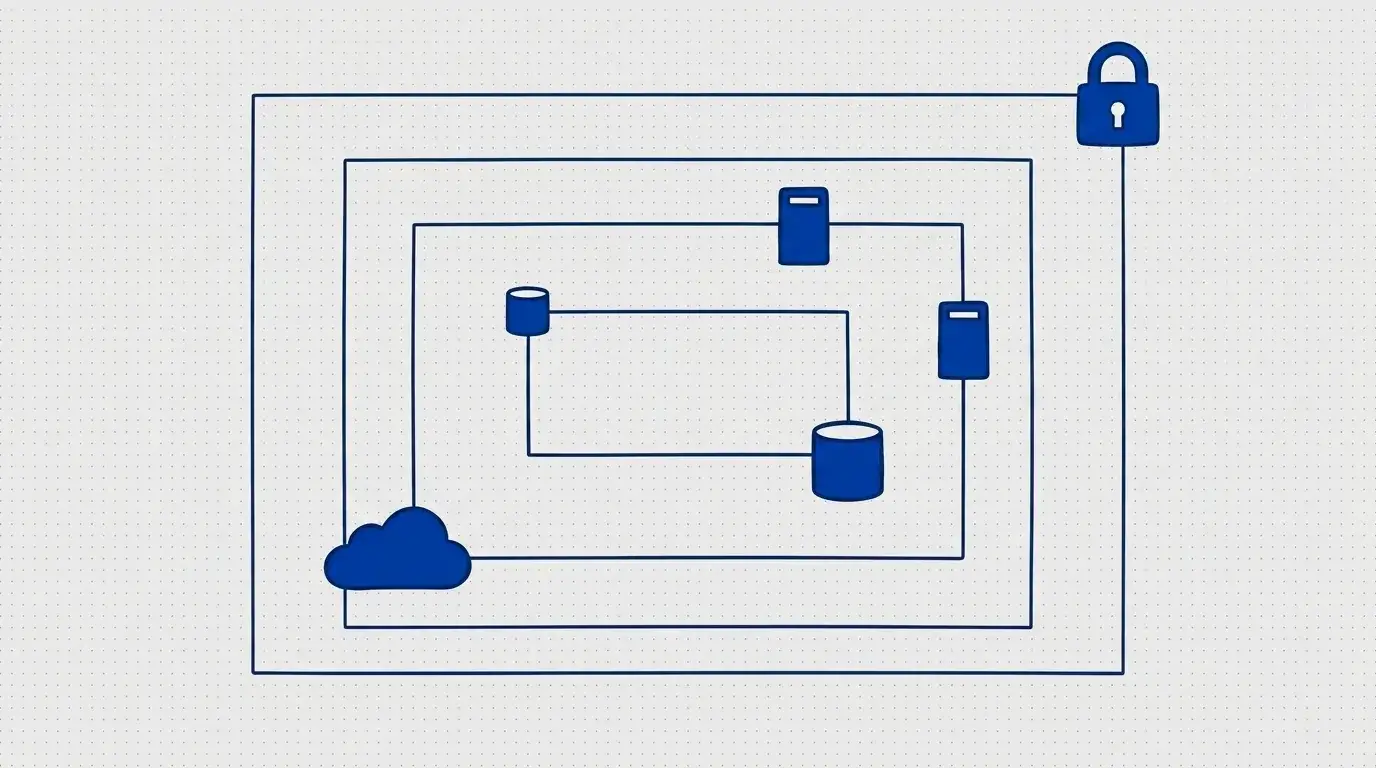
Abstract diagram of structured IT governance layers representing enterprise architecture and security oversight.

Most engagements run as embedded leadership for a defined number of days per month, typically over six to twelve months. Some start as a fixed-scope review — vendor and SaaS audit, security posture assessment, IT architecture review, or transaction due diligence — with a written deliverable, and convert into ongoing work once we both see what is needed.

Tell us where you are and what is in front of you. Book a Discovery Call.

Fractional CIO — Frequently Asked Questions

Common questions from CEOs, COOs, and boards considering fractional information systems leadership.

What does a fractional CIO do?

A fractional CIO owns the company’s information systems and technology operations on a part-time, embedded basis — typically a fixed number of days per month. The work covers IT strategy and roadmap, SaaS and vendor rationalization, infrastructure and cloud decisions, security program ownership, enterprise architecture, IT team structure and hiring, and board-level communication of technology risk. The role is executive judgment and accountability, not help-desk capacity or implementation labor.

How is a fractional CIO different from a fractional CTO?

The two roles overlap, but they are not the same. A CTO owns product engineering — what you build, how you build it, the architecture of the product itself. A CIO owns the technology the business runs on — SaaS portfolio, identity and access, security posture, vendor contracts, internal infrastructure, IT staff, and the systems every department depends on. Many small companies need both perspectives; some need one urgently. We will tell you on the first call which one fits your situation, and we engage in either role.

How much does a fractional CIO cost?

Engagements are scoped to the situation — typically a fixed number of days per month under a monthly retainer, or a fixed-scope assessment (vendor audit, security posture review, architecture review) with a written deliverable. A fractional CIO is materially less than a full-time hire, which typically runs deep into six figures with equity, and removes the multi-month search and ramp. We send a written scope and price before any commitment.

When does a company need a fractional CIO?

The pattern is usually one of these: SaaS spend has grown faster than anyone is tracking and contracts are renewing without owners; security or compliance is becoming a customer requirement and there is no executive accountable for it; the company is between CIOs or has never had one and the operations team is making decisions above their pay grade; an acquisition, audit, or fundraise is forcing an honest look at the IT environment; or the board is asking technology risk questions the leadership team cannot answer with confidence. If two or more of those are true, a fractional CIO is usually the right call.

How fast can you start an engagement?

Most engagements start within one to three weeks of an initial discovery call. Fixed-scope assessments — vendor and SaaS audit, security posture review, IT architecture review — typically begin the same week. We will tell you on the first call whether we are the right fit and what a realistic start date looks like.

Ready to talk?

Tell us what IT decisions are in front of you. We will get back to you within one business day.