
The situation

A growth equity firm was in LOI on a software company operating in the enterprise, eCommerce, and search market. The target ran a Lucene-based search platform serving mid-market customers, and the investment thesis depended on the technology being both differentiated and scalable. The firm had a fixed window to bring a recommendation to their Investment Committee and conviction to defend, either way.
An incomplete technical assessment in a category this specialized would put capital into a company whose competitive position, roadmap maturity, and engineering capacity were not what they appeared from a pitch deck. The firm needed someone who could read the architecture, evaluate the product against the live competitive set, and judge whether the team behind it could execute the growth plan — in two weeks, alongside the rest of the workstreams a post-LOI process demands.
A boilerplate diligence report would not answer the question. The firm needed a market-aware technical voice, fast.
Why they called us
A referral brought them to Develomentor. The deciding factor was depth in the exact category the target operated in. Develomentor is led by Grant Ingersoll — a Lucene committer, OpenSearch contributor, co-founder of Apache Mahout, and co-founder and former CTO of Lucidworks, a leading commercial company in the open-source search market. He had built, sold, and competed against the technology the target was selling.
That is the difference between reading a deck and reading a market. The firm did not want a generalist tech-diligence team. They wanted someone who would know — on contact with the architecture — what was real and what was packaging.
What we did
The engagement ran for two weeks, post-LOI, in parallel with the firm’s other diligence workstreams. Grant Ingersoll led the assessment, with Develomentor team support on code and documentation review and the open-source licensing analysis. The work was structured as a nine-area technical assessment, combining management interviews, architecture walkthrough, code and documentation review, and a licensing review of the open-source stack. The team met repeatedly with the firm’s M&A team throughout, surfacing findings as they developed rather than holding them for a single end-of-engagement readout.
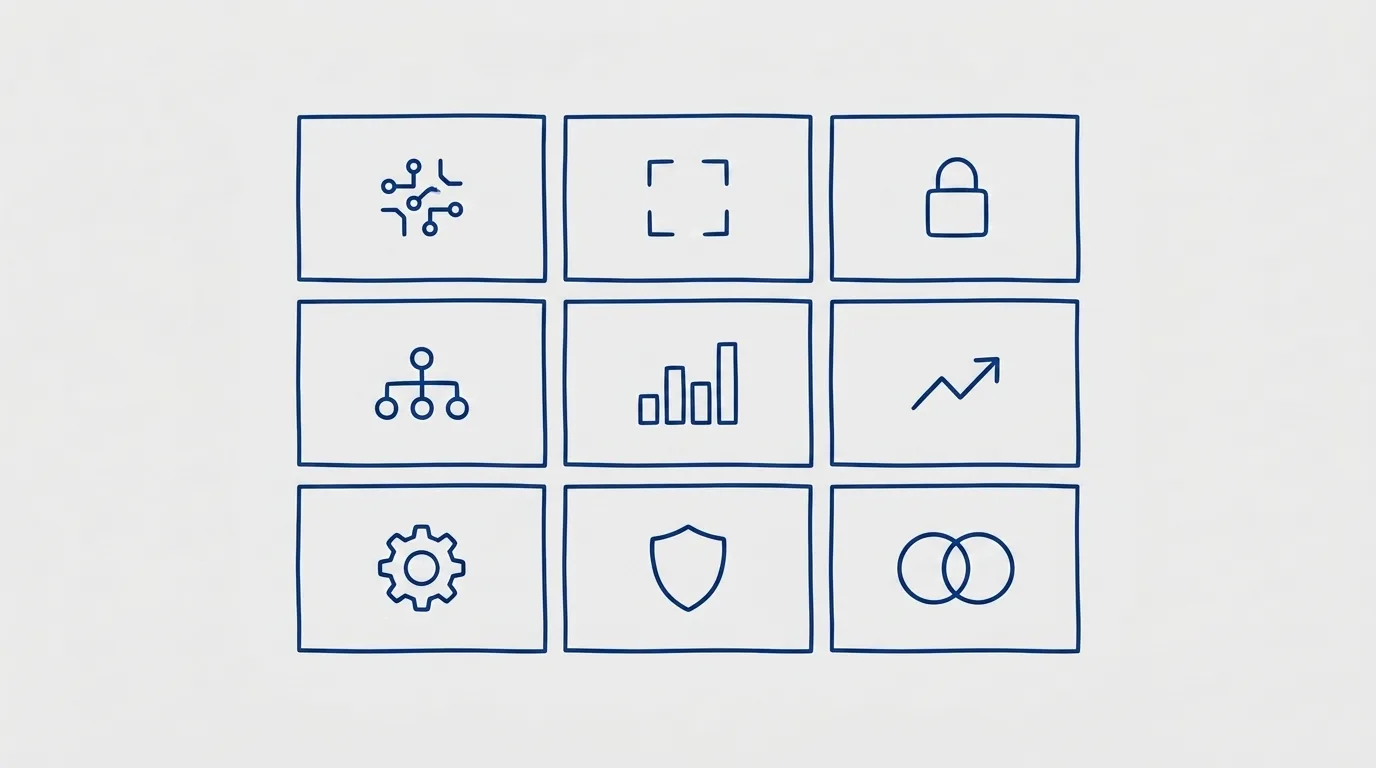
The nine areas:
- System architecture. Cloud-native architecture abstracting across major hyperscalers; homegrown multi-tenancy layer; meaningful multi-region deployment footprint; tiered disaster-recovery design; a large managed search node estate under management.
- Relevance, analytics, and ML. Customers owned their own analytics. A/B testing was still in R&D, with little machine learning in place or in active development.
- Security and privacy. Standard enterprise security controls in place — authentication layers, network access restrictions, key management, and a third-party audit program — fitting within a broader compliance posture.
- DevOps and SRE. A lean operations team managing a large node estate across continuous coverage. Standard deployment practices, scheduled backups, a clean SLA record, and disciplined version management. Strong operations for the headcount.
- Support model. Onboarding was services-intensive by the firm’s own characterization. Advisory support, incident handling, and post-mortems were in place, but the services burden was material.
- Product roadmap. Held primarily by one executive, with no durable long-term plan visible. The flagship product trailed the category leader on a meaningful set of features.
- Engineering team. A small, specialized engineering team with a flat org structure. Plans to scale were in the growth plan but not yet executed.
- Competitive positioning. Customers had specifically chosen the target’s underlying engine over the alternative. The market on that engine was less saturated than the competing managed market. The flagship product was behind the category leader; the broader platform had room to grow.
- Software licensing. Standard M&A risk review for a Lucene-based stack — codebase and upstream dependencies checked for GPL and other viral licenses and how exposure was contained.
The format was hands-on: code review, architecture review, documentation review, and direct management interviews. Each area produced a finding that fed the overall investment recommendation.
The result
The diligence produced a clear no recommendation, and the firm passed on the investment. That, on its own, is the outcome the engagement was built to produce — a defensible answer in two weeks, either direction.
The recommendation rested on three compounding risks. The product roadmap lived primarily in one executive’s head, with no durable long-term plan — high key-person dependency and limited product-management maturity. The flagship feature set was meaningfully behind the category leader, a ceiling on growth if buyer expectations continued to shift toward more advanced capabilities. And the engineering team was operationally strong for its current scope but understaffed for the roadmap acceleration the growth plan required.
Each risk on its own was defensible. Together, they were the profile of a company facing more execution than its current team and roadmap maturity could comfortably absorb in the growth plan’s window.
The value of the engagement was a clean no. Capital was protected. Time and partner attention were redirected to higher-conviction targets. And the firm came away with a replicable diligence approach — a structured nine-area technical session, market-grade expertise from someone active in the category, and an investment recommendation grounded in the technology itself — that they could call on for the next search or AI deal in their pipeline.
What this means for you
If you are an investment professional at a PE or growth equity firm with a software target in LOI that touches search, AI, or data infrastructure — and you suspect your generalist diligence team will not actually understand the technology — this pattern is yours. Two to four weeks before IC is enough time to get a defensible answer, but only with the right operator in the room. You need someone who has built what the target is selling, not someone who will read the pitch deck back to you.
Tell us about the deal. Book a Discovery Call.